
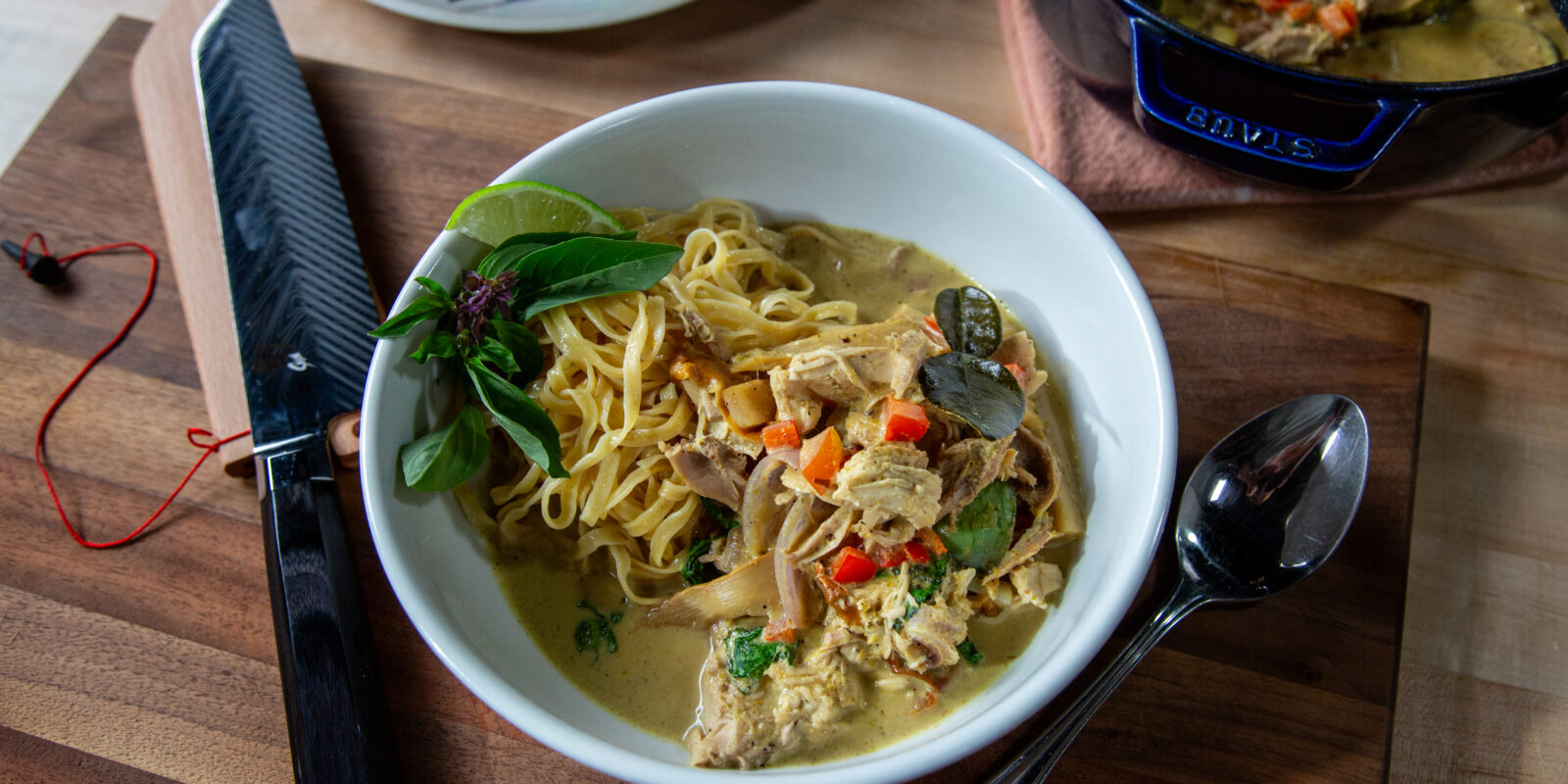
Thai Green Curry with Leftover Thanksgiving Turkey
By Andrew Zimmern
Thanksgiving is my favorite holiday of the year, but after a day or two, I’m ready for something that tastes absolutely nothing like Thanksgiving dinner. This Thai green curry is one of my favorite ways to transform leftover turkey into something completely different. The coconut milk brings moisture back to the meat, while green curry paste, makrut lime leaves, fish sauce and plenty of Thai basil create a fragrant, spicy, deeply satisfying bowl of food. Dark meat is especially good here, but any leftover turkey will work. The trick is to fry the curry paste first to wake up all those aromatics, then add the cooked turkey at the very end so it stays tender. Serve it over noodles, and you’ve got a terrific meal in very little time.
Turkey Green Curry
Ingredients
- 3 to 4 tablespoons Thai green curry paste, preferably Mae Ploy
- 1 teaspoon neutral oil, if needed
- 4 makrut lime leaves, lightly torn
- 1 to 2 Thai bird’s eye chilies, slit lengthwise, optional
- 1 to 2 teaspoons palm sugar or light brown sugar
- 2 (13.5-ounce) cans full-fat unsweetened coconut milk
- 1/2 cup chicken or turkey stock, plus more as needed
- 1 cup Thai eggplant, quartered, or Japanese eggplant, cut into bite-sized pieces
- 1 red bell pepper, diced
- 1 cup bamboo shoots, drained, optional
- 3 to 4 cups cooked leftover turkey, shredded or cut into bite-sized pieces, preferably dark meat
- 2 tablespoons fish sauce, plus more to taste
- 1 tablespoon fresh lime juice, plus lime wedges for serving
- 1 generous cup Thai basil leaves, plus more for garnish
- Freshly ground black pepper, to taste
- Cooked Asian noodles, for serving
Instructions
Fry the curry paste. Heat a large saucepan or wok over medium heat. Add the green curry paste with a small amount of neutral oil, if needed, and fry for 2 to 3 minutes, stirring frequently, until fragrant. Add the makrut lime leaves, Thai chilies, if using, and palm sugar. Stir briefly to release the aromatics.
Build the curry. Pour in the coconut milk and stock, stirring to incorporate the curry paste. Bring to a gentle simmer.
Cook the vegetables. Add the eggplant, red bell pepper and bamboo shoots, if using. Simmer gently for about 8 to 10 minutes, until the eggplant is tender but the vegetables still have some texture. Unlike many Western dishes, where you start by sautéing the vegetables, this curry develops its flavor by frying the seasoning paste first, then gently simmering the vegetables in the liquid.
Add the turkey. Stir in the leftover turkey and simmer gently for a few minutes, just until heated through. Remember, the turkey is already cooked. There’s no reason to cook it again. Avoid a vigorous boil, which can make the meat dry and stringy. Make sure the turkey reaches 165°F.
Finish the curry. Add the fish sauce, lime juice, Thai basil and a few grinds of black pepper. Stir gently, then taste and adjust the seasoning. You’re looking for a balance of heat, sweetness, salt and acidity. Add more fish sauce if it needs salt, a touch of sugar if it’s too sharp, or a little lime juice to brighten everything up. If the curry is too thick, add another splash of stock. Remove from the heat.
Serve. Divide the cooked noodles among warm bowls and ladle the turkey green curry over the top. Finish with additional Thai basil, fresh chilies if desired, and lime wedges.
Tips
Use a good curry paste. I love Mae Ploy green curry paste. It’s intensely flavorful, has plenty of heat, and saves me hours compared with making curry paste from scratch. You can find it at many Asian grocery stores or online. Start with a little less if you’re sensitive to spice.
Don’t overcook the turkey. This is probably the most important part of the recipe. The curry sauce and vegetables should be essentially finished before the turkey goes in. You’re just warming the meat through, not cooking it a second time. Dark meat is especially forgiving, but white meat works beautifully as long as you treat it gently.
Don’t skip the Thai basil. I use a generous handful because its distinctive aromatic flavor is essential to this curry. Add it at the end to preserve its fragrance.
Keep the curry a little soupy. I love serving this over noodles, which absorb some of that wonderful coconut curry broth. You can also serve it over rice or eat it straight out of a bowl as a soup.
Use whatever leftover meat you have. This technique works just as well with leftover roast chicken or pork. And don’t overlook the little pieces of turkey you can pull from the carcass after carving. Those scraps are perfect for a dish like this.


