Suckling Pig Philly-Style with Garlicy Broccoli Rabe and Aged Provolone
By Andrew Zimmern
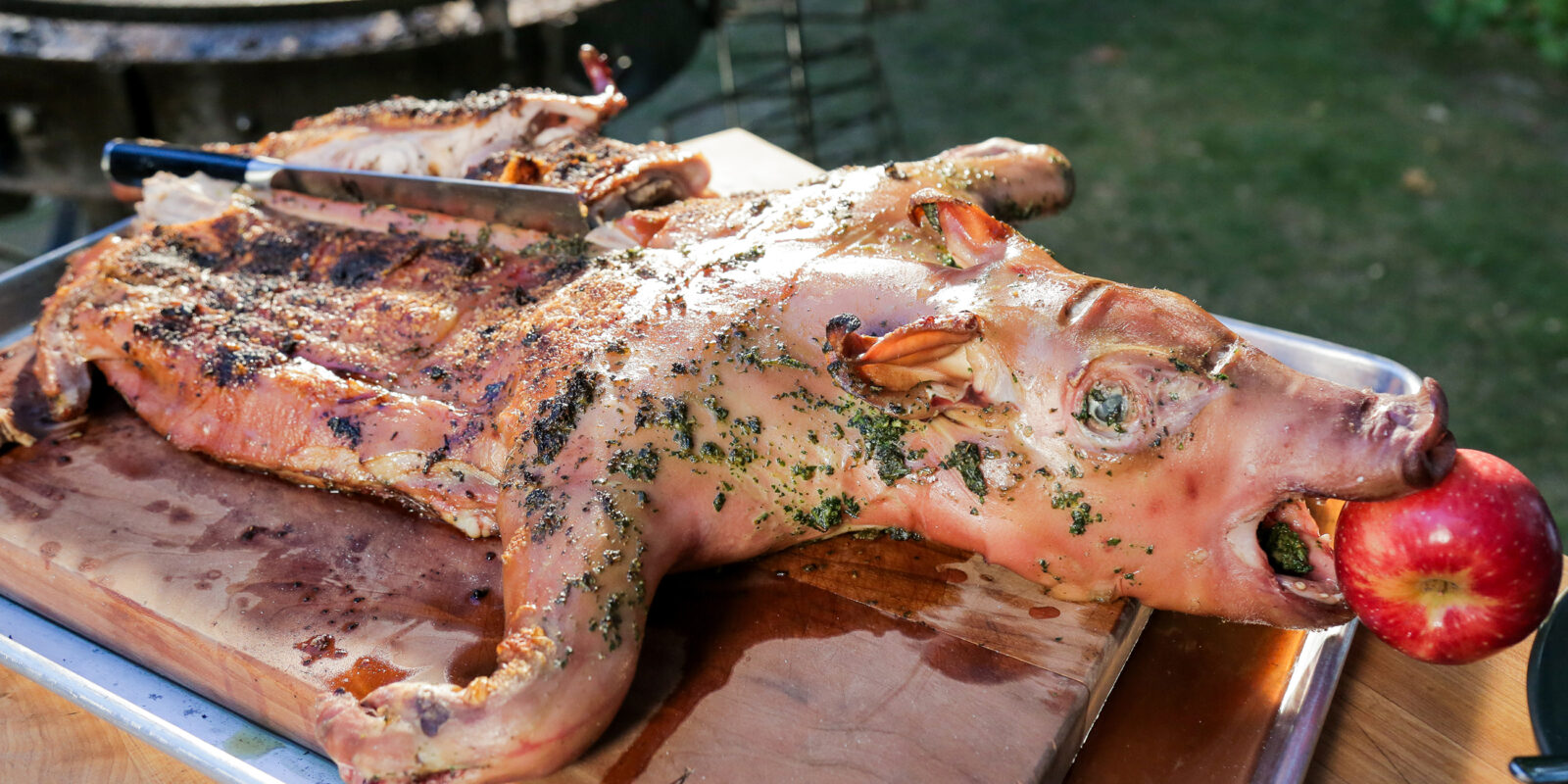
A whole roasted suckling pig is already a showstopper, but this version takes its inspiration from the classic Philadelphia roast pork sandwich. The pig is seasoned with a parsley-garlic rub, slow-roasted over live fire until the skin is crisp and the meat is tender, then piled onto crusty rolls with bitter garlicky broccoli rabe and sharp aged provolone. It is rich, crunchy, smoky, and exactly the kind of sandwich that rewards doing things the long way.
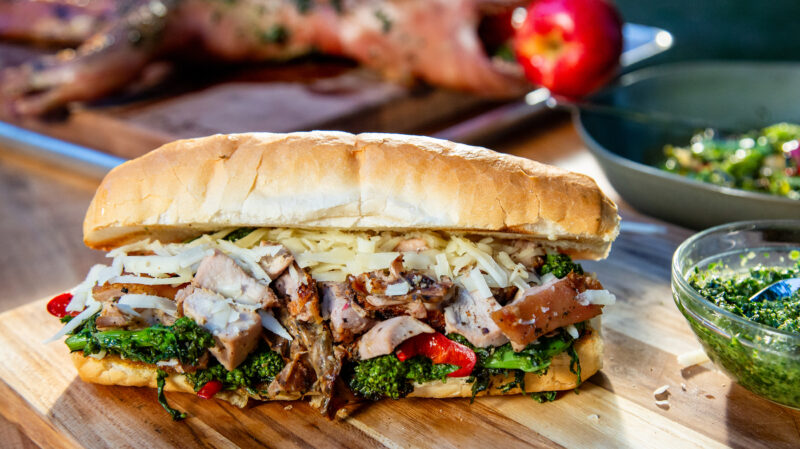
Whole Roasted Suckling Pig
Ingredients
For the pig
- 1 whole baby pig (15 to 20 pounds), washed and dried very well
- Kosher salt, for seasoning
- 1 bunch flat-leaf parsley, torn into pieces
- 12 garlic cloves
- 1 cup olive oil, plus more as needed
- 1/4 cup Andrew Zimmern x Badia Italian Seasoning
- 2 tablespoons red wine vinegar
For the broccoli rabe
- 2 bunches broccoli rabe, tough ends trimmed
- 3 tablespoons olive oil
- 6 garlic cloves, thinly sliced
- 2 small red chiles, thinly sliced
- Kosher salt
- Freshly ground black pepper
- Red wine vinegar, to taste
For serving
- 6 to 8 ounces aged provolone, grated
- Large crusty Italian hoagie rolls or similar bread, toasted
Instructions
Salt the pig overnight
Prick the skin all over with a fork. Season the pig generously all over with kosher salt and refrigerate overnight, uncovered. Before cooking, wipe it dry.
Prepare the pig
Using a serrated knife or heavy cleaver, carefully cut through the rib bones and any extra connective tissue so the pig can lay flat in its cradle or grill press. Do not remove the legs, since that is where much of the meat is on a pig this size. If needed for your setup, you can remove the head, but it is not necessary.
In a food processor, combine the parsley, garlic, olive oil, vinegar, and Italian seasoning. Process into a thick, spreadable paste. Reserve a ¼ cup for use on the sandwiches later if you’d like.
Rub the remaining parsley mixture all over the inside of the pig, working it into the rib cage, hams, and head cavity. Lay the pig into a grill cradle or clamp and secure the legs tightly with wire or butcher’s twine so it holds its shape during roasting.
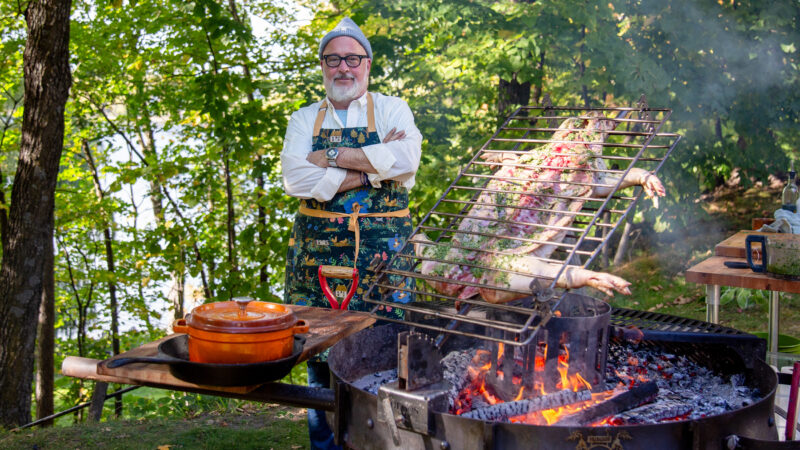
Roast the pig
Prepare a live-fire grill for direct cooking. Position the pig in the cradle over even heat. Start by crisping the skin side first. If your fire is running hot, then flip and continue roasting as needed, adjusting the coals so the heat is balanced from head to ham. Roast until the rear legs reach 165 to 170 degrees Fahrenheit and the skin is deeply crisp, about 90 minutes total depending on heat and pig size. Rest before carving.
The broccoli rabe
Lightly coat the broccoli rabe with olive oil and grill over high heat just until lightly charred in spots. You are not trying to mark every piece, just to pick up some smoky flavor. Chop into smaller pieces for easier sandwich filling.
Heat the olive oil in a cast-iron skillet over medium heat. Add the chiles and sliced garlic and cook gently until fragrant but not browned. Add the chopped broccoli rabe, season with salt and pepper. Add about a ¼ cup of water and cook until very soft and tender. Add a splash of red wine vinegar at the end for brightness. The greens should be soft, savory, a little bitter, and highly seasoned.
Pull the pork
Remove any wires or ties from the pig. Pull the meat from the legs, loin, and belly, chopping or shredding into sandwich-sized pieces. Mix in bits of crispy skin for texture. Discard cartilage or any tough connective tissue.
Build the sandwiches
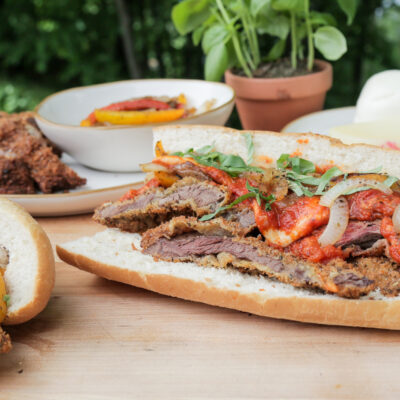
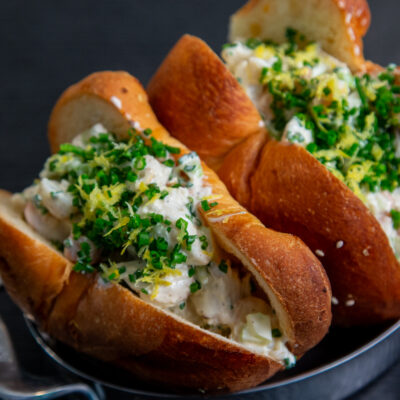
Pile the warm pork onto toasted hoagie rolls. Top with the hot broccoli rabe and a generous amount of grated aged provolone. Add reserved parsley puree if you’d like. Serve immediately. The residual heat from the pork and greens will soften the cheese slightly, but it should still keep some texture.
Notes:
Use aged imported provolone, not deli slices. It should be sharp, dry, and grate-able.
Wear long sleeves and heatproof gloves when moving the pig or opening the clamp. Hot fat and juices can burn badly.
This can also be adapted for an oven-roasted pig if you do not have a live-fire setup. The greens can be finished on the stovetop.